
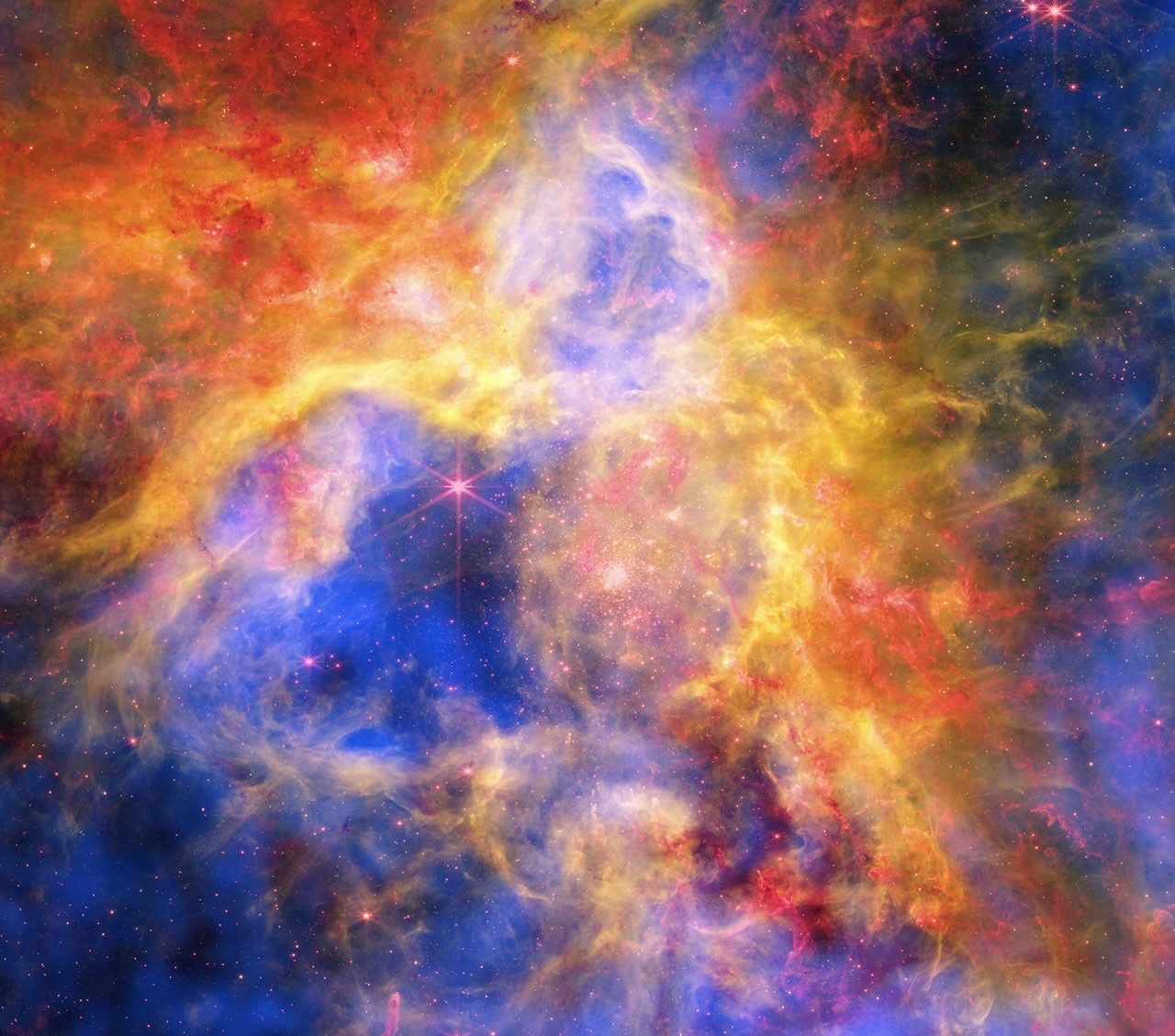
Dados do Chandra X-ray Observatory, do James Webb Space Telescope e do Hubble Space Telescope, da NASA, combinam-se para revelar uma visão vibrante de 30 Doradus, ou Nebulosa da Tarântula, nesta imagem de 11 de agosto de 2026. Localizada na Grande Nuvem de Magalhães, uma pequena galáxia vizinha da Via Láctea, a cerca de 160 mil anos-luz da Terra, a Tarântula abriga milhares de estrelas jovens inseridas em uma vibrante estrutura de gás e poeira semelhante a um favo de mel.
Ao estudar os dados do Chandra, do Hubble e do Webb, combinados com dados do Spitzer Space Telescope, já desativado, da agência, os astrônomos determinaram que a Tarântula pode estar perdendo energia de várias fontes, incluindo gás quente escapando da nebulosa.
Saiba mais sobre esta imagem.
Crédito da imagem: Raios X: NASA/CXC/Ohio State Univ./J. Rodriguez et al.; Infravermelho: NASA/ESA/CSA/STScI; Óptico: NASA/ESA/STScI; Processamento da imagem: NASA/CXC/SAO/P. Edmonds