Astronomia Brasil
notíciasNASA

Estágio central do SLS da Artemis III se junta aos propulsores em Kennedy

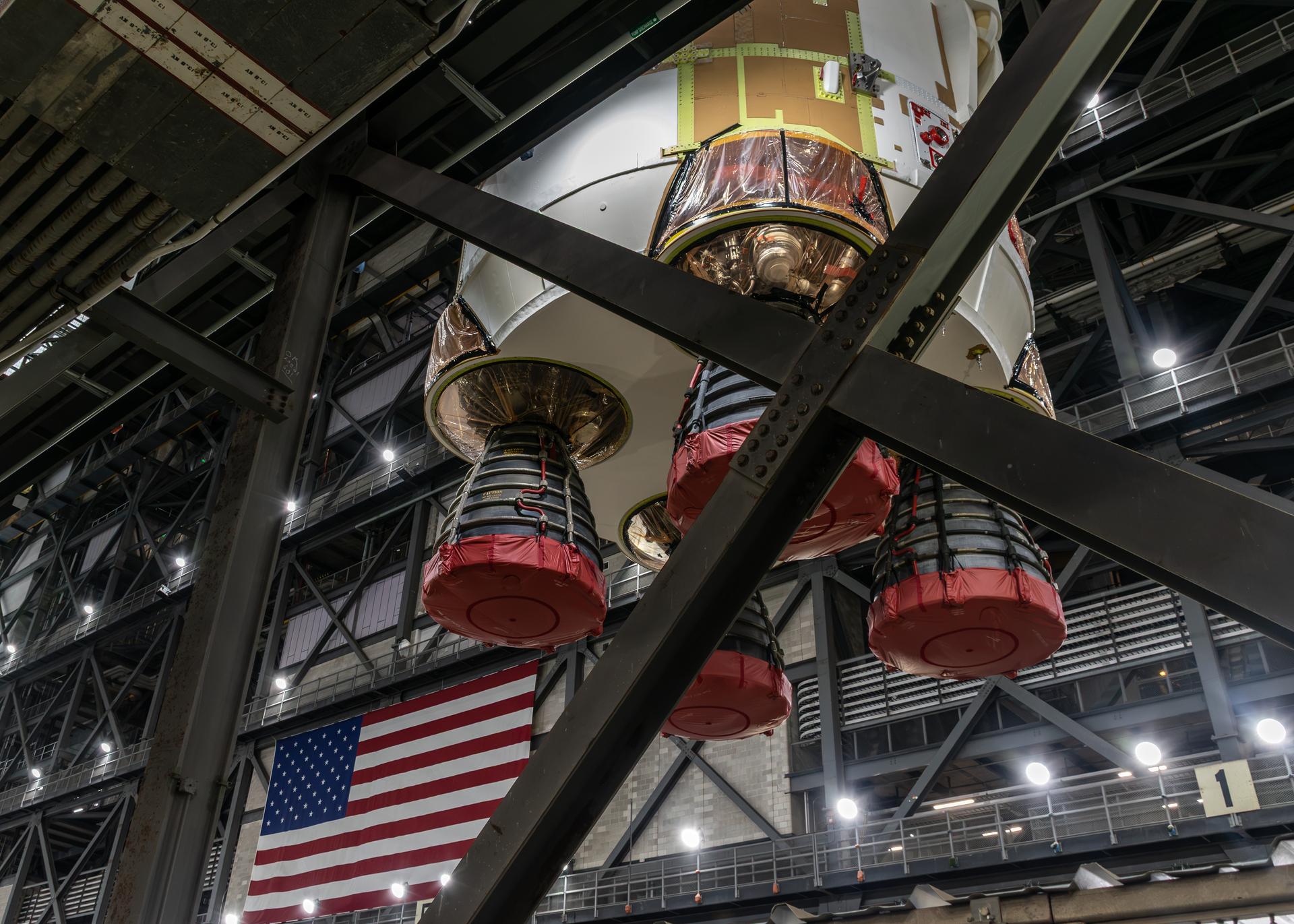
A view of the bottom portion of the 212-foot core stage of the Space Launch System rocket as a crane moves it vertically above the transfer aisle of the Vehicle Assembly Building. Dominating the center of the image are four rocket engines covered in red caps.
O estágio central do SLS (Space Launch System) é içado do corredor de transferência do Vehicle Assembly Building, no Kennedy Space Center da NASA, na Flórida, na quinta-feira, 22 de outubro de 2026. NASA/Sean Cannon
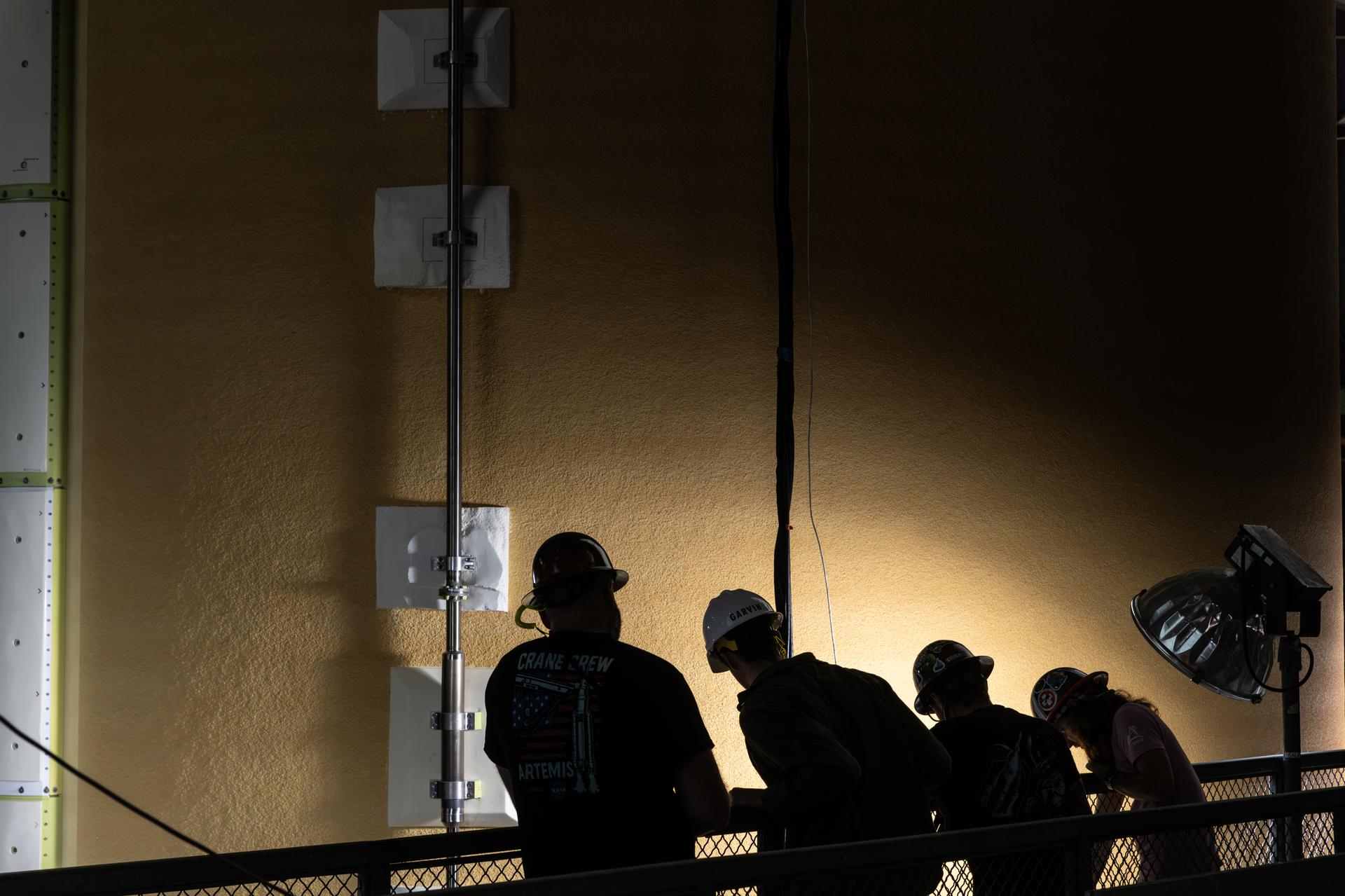
Four people in hard hats are silhouetted against the side of the core stage of the Space Launch System rocket as it is raised in the transfer aisle of the Vehicle Assembly Building. A spotlight on the group’s right shines a bright spot on a portion of the orange stage which is very close and fills the image.
O estágio central do SLS (Space Launch System) está na horizontal no corredor de transferência do Vehicle Assembly Building, no Kennedy Space Center da NASA, na Flórida, na sexta-feira, 23 de outubro de 2026. NASA/Cory S Huston
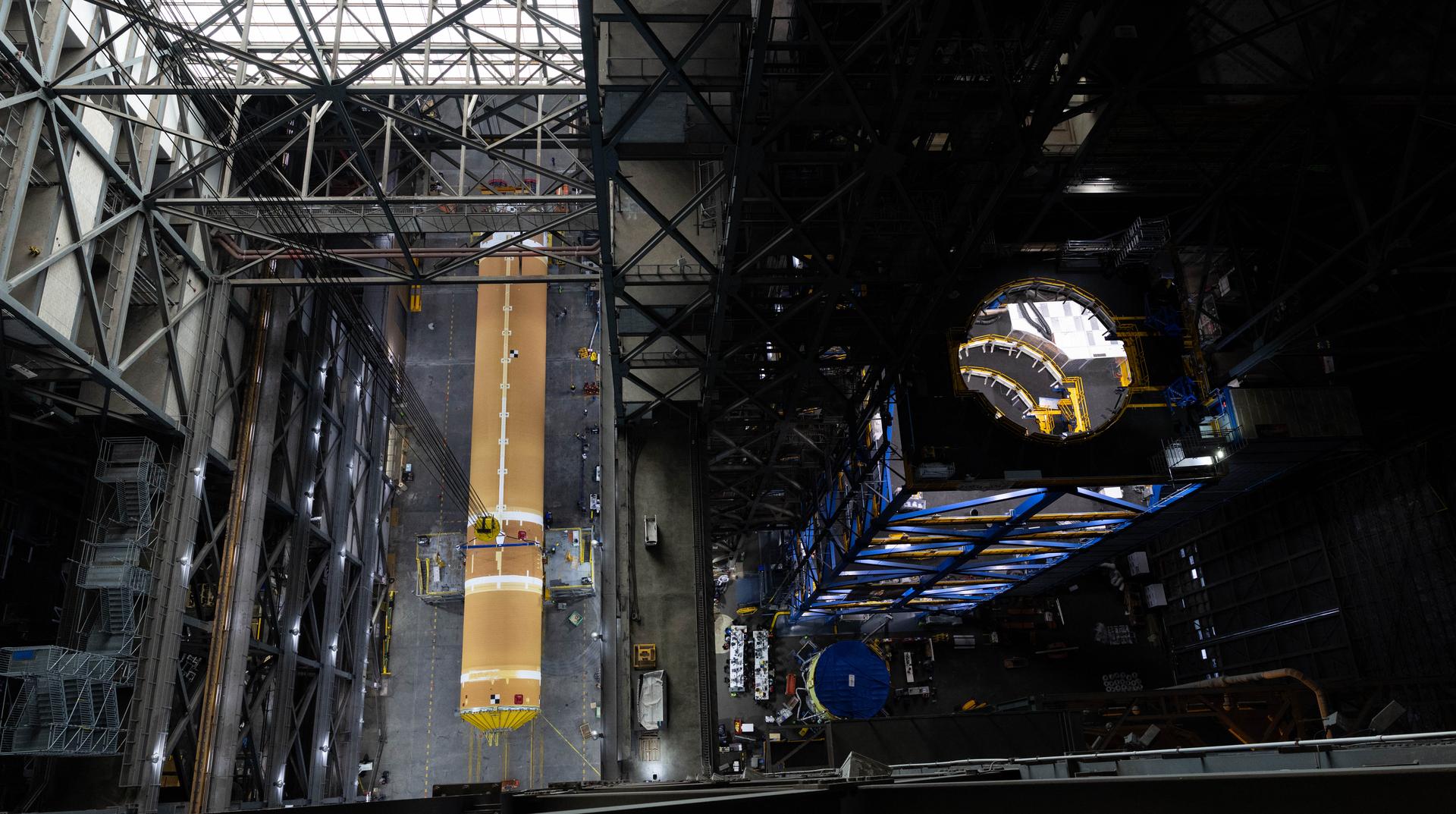
Vertical overhead view of a rocket stage extending through the center of a large assembly building, framed by surrounding platforms and structure.
O estágio central do SLS (Space Launch System) é integrado aos segmentos dos motores dos dois propulsores de combustível sólido no domingo, 25 de outubro de 2026, dentro do Vehicle Assembly Building, no Kennedy Space Center da NASA, na Flórida, concluindo sua configuração de pilha curta. NASA/Sean Cannon
The 212-foot core stage of the Space Launch System rocket is vertical in High Bay 3 of the Vehicle Assembly Building. The nose cones of the two side boosters are visible as the crane places the core stage between them where they are already set on the Mobile Launcher.
O estágio central do foguete SLS (Space Launch System) é integrado aos propulsores de combustível sólido da Artemis III no High Bay 3 do Vehicle Assembly Building, no Kennedy Space Center da NASA, na Flórida, para concluir sua configuração de pilha curta. NASA/Frank Michaux
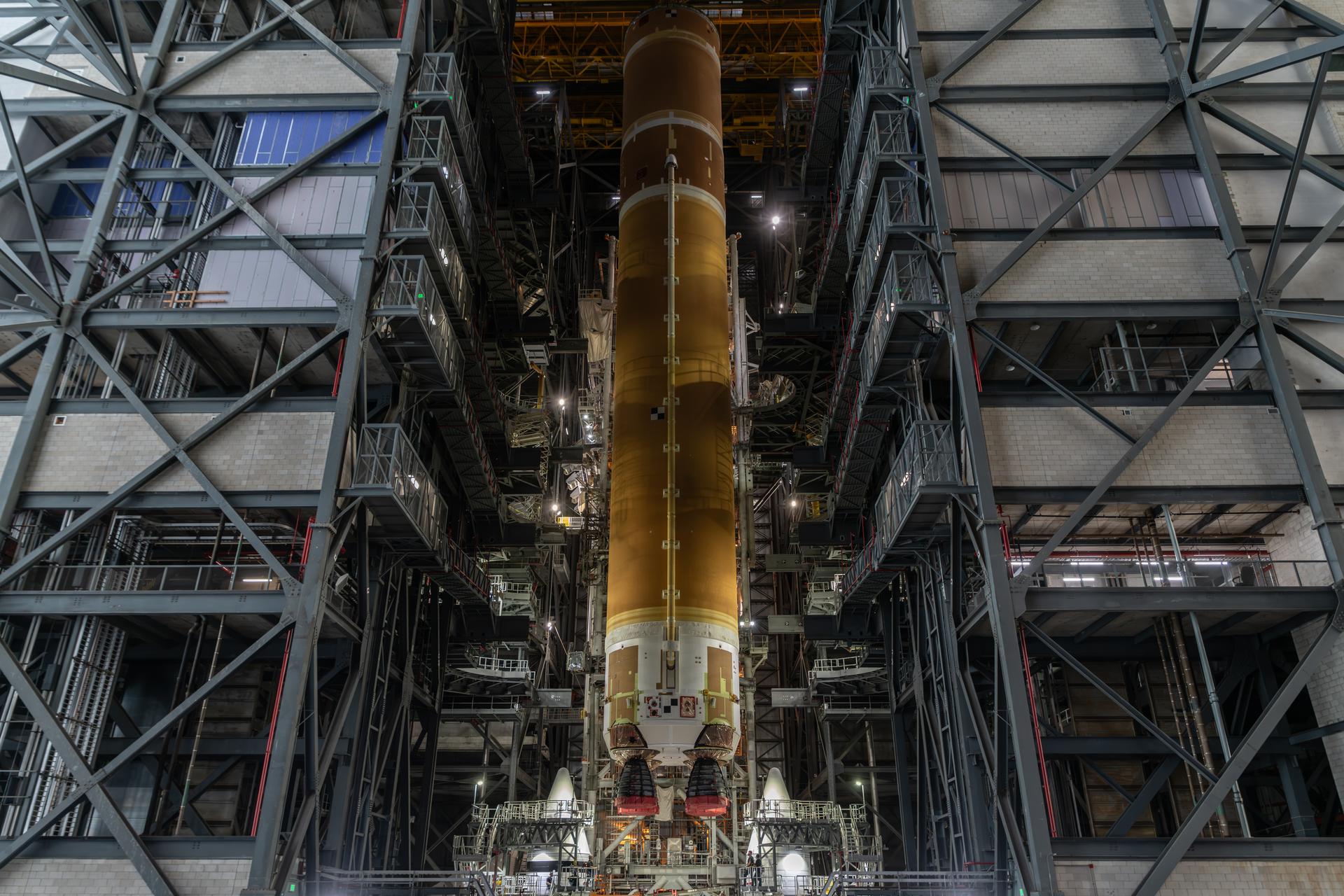
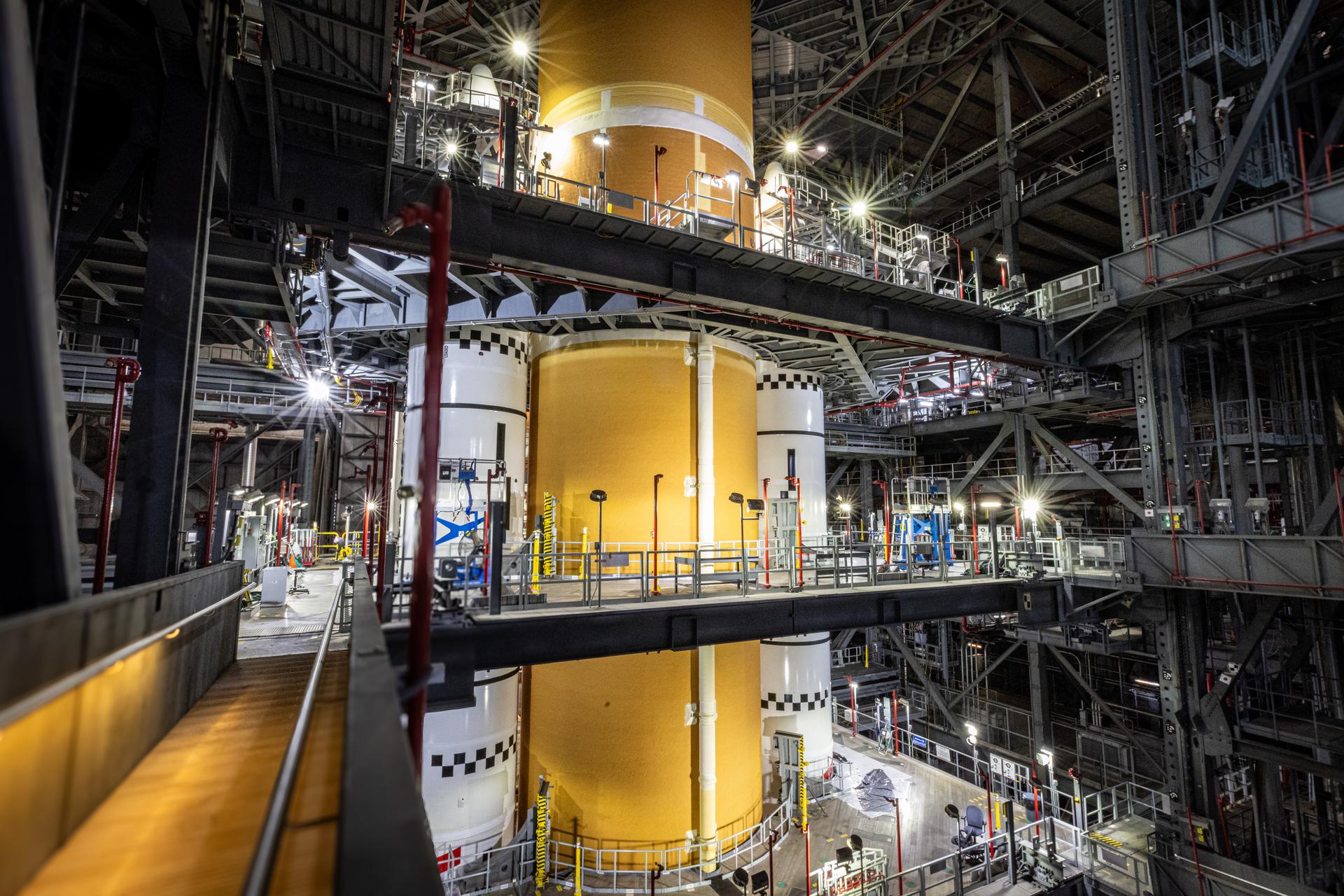
The central portion of the Space Launch System rocket stack is seen from a platform across the central aisle in the Vehicle Assembly Building. The nose cones of the solid rocket booster flank the orange core stage and are surrounded by platforms and staircases.

O estágio central do SLS (Space Launch System) da Artemis III, da NASA, foi integrado ao lado dos dois propulsores de combustível sólido em 28 de outubro, dentro do High Bay 3 do Vehicle Assembly Building, no Kennedy Space Center da NASA, na Flórida.

Técnicos içaram o estágio de 212 pés (cerca de 65 metros) a partir do High Bay 2 da instalação, usando uma viga de içamento exclusiva, projetada para posicionar o estágio sobre a plataforma móvel de lançamento. Após a conclusão dos testes e das verificações, as equipes levarão o estágio central e o conjunto de propulsores até a Plataforma de Lançamento 39B para realizar um teste de abastecimento. Nele, hidrogênio líquido e oxigênio líquido serão carregados apenas no estágio central, enquanto as equipes de lançamento praticarão os procedimentos e cronogramas da contagem regressiva.

A missão Artemis III levará os astronautas da NASA Randy Bresnik, Frank Rubio e Andre Douglas, além do astronauta da ESA (Agência Espacial Europeia) Luca Parmitano, a bordo da nave espacial Orion, no topo do foguete SLS. O objetivo é testar as capacidades de encontro e acoplamento entre a Orion e as naves espaciais comerciais da Blue Origin e da SpaceX, antes de futuras missões para levar astronautas à Lua.

Crédito da foto: NASA/Sean Cannon, Cory S Huston e Frank Michaux