Astronomia Brasil
notíciasNASA

O telescópio espacial James Webb da NASA captura a inquietante Cabeça de Gato

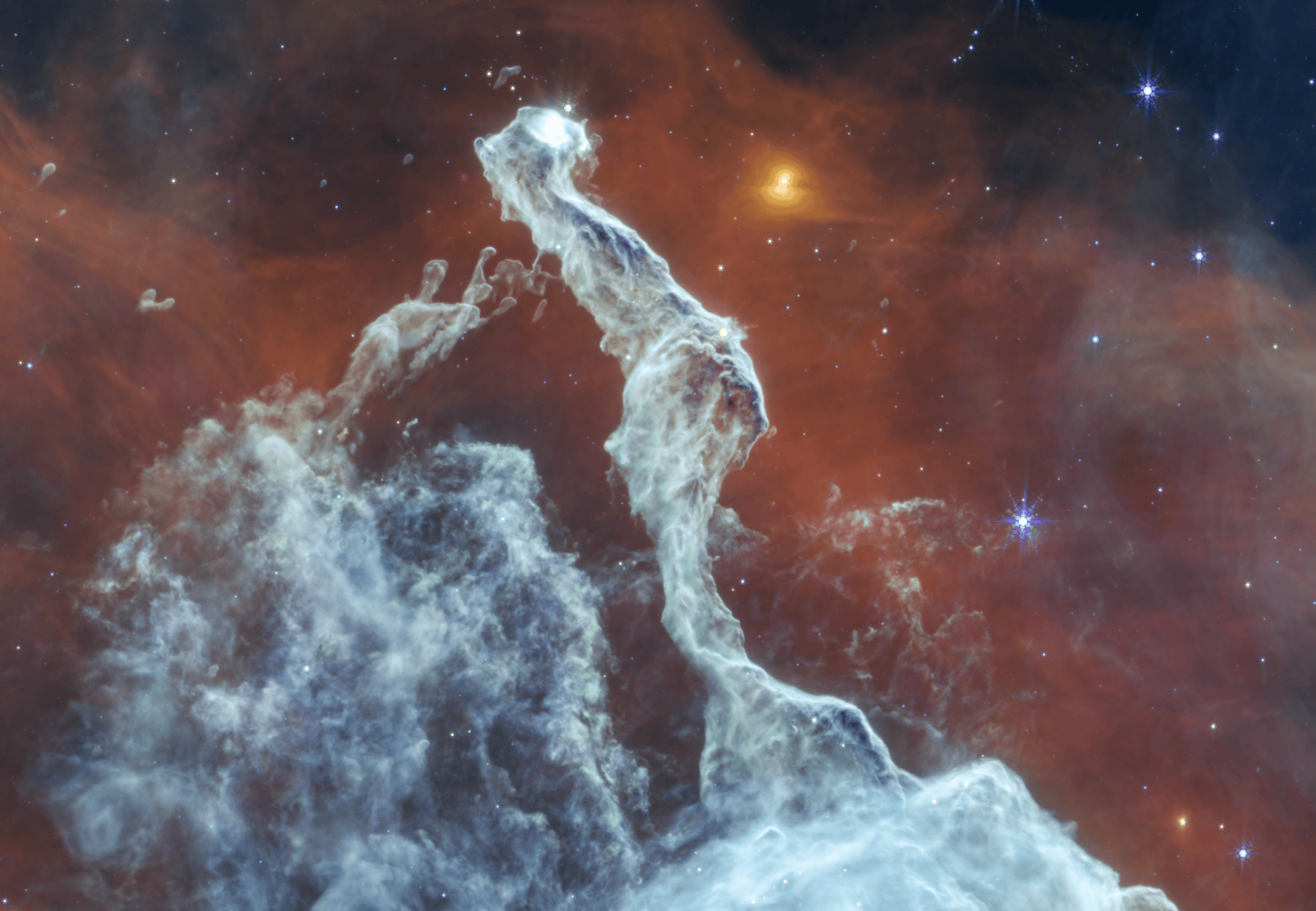
Mid-infrared image of the Cat’s Head Nebula by the James Webb Space Telescope. A bluish-gray filament of dust is in the center, stretching from the bottom to almost the very top. It has a narrow, irregular shape that resembles a cat sitting with its back toward the viewer and a tail extending downward. The tail ends at the lower one-third of the image and widens to a triangular peak of dust. The cat’s head is turned toward the right, revealing a white glowing eye. The background is mostly red, with the top left and right corners revealing the black background of space. On the cat’s left is a dome-shaped grouping of faint filaments of dust. Scattered throughout the view are yellow and blue stars, some with Webb’s signature eight-point diffraction spikes.
NASA, ESA, CSA, STScI; processamento da imagem: Joseph DePasquale (STScI)
Estruturas intrincadas na Nebulosa Cabeça de Gato são iluminadas nesta imagem em infravermelho médio do Telescópio Espacial James Webb, da NASA, divulgada em 29 de outubro de 2026. O formato característico de “cabeça de gato” da nebulosa provavelmente foi esculpido ao longo do tempo pela intensa radiação ultravioleta e pelos ventos de estrelas massivas na Nebulosa Carina. À medida que esse feedback estelar corrói o gás e a poeira ao redor, o material mais denso dentro do pilar em forma de felino resiste à erosão — pelo menos por enquanto. Crédito da imagem: NASA, ESA, CSA, STScI; processamento da imagem: Joseph DePasquale (STScI)